
The Shoah Torah
In 2024, Temple Beth Torah launched the “Shoah Torah B’nai Mitzvah Project.
Students studying for their B’nai Mitzvah have the opportunity to earn the privilege of reading from the Shoah Torah on their special day if they complete a number of Holocaust-themed projects. In addition, they are given the honor of holding the Shoah Torah during one of the recitations of Kol Nidre during Yom Kippur, and they each also receive an inscribed copy of “1564 Scrolls: A Legacy of Jewish Life in Bohemia and Moravia” by Miles Laddie.
5786 Students
Maya Goldberg, Jake Singer, Emily Wellikoff, Jacob Silverman, Evan Margasak, Carli Forti
Temple Beth Torah's Shoah Torah
The Memorial Scrolls Trust cares for 1,564 Torah scrolls that represent the lost Jewish communities of Bohemia and Moravia. Some 1,400 scrolls have been allocated on loan to communities and organizations around the world. The following is a brief history of how Temple Beth Torah received their scroll (#855) and the known history behind it.
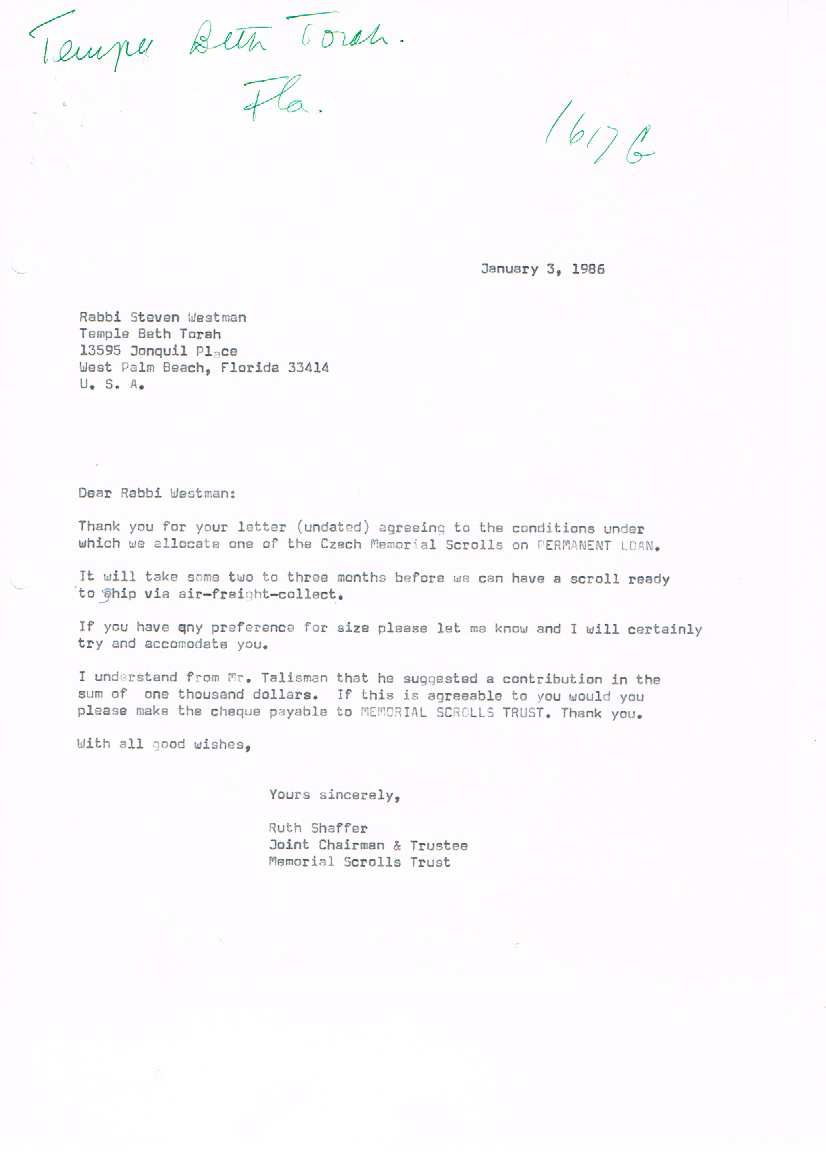
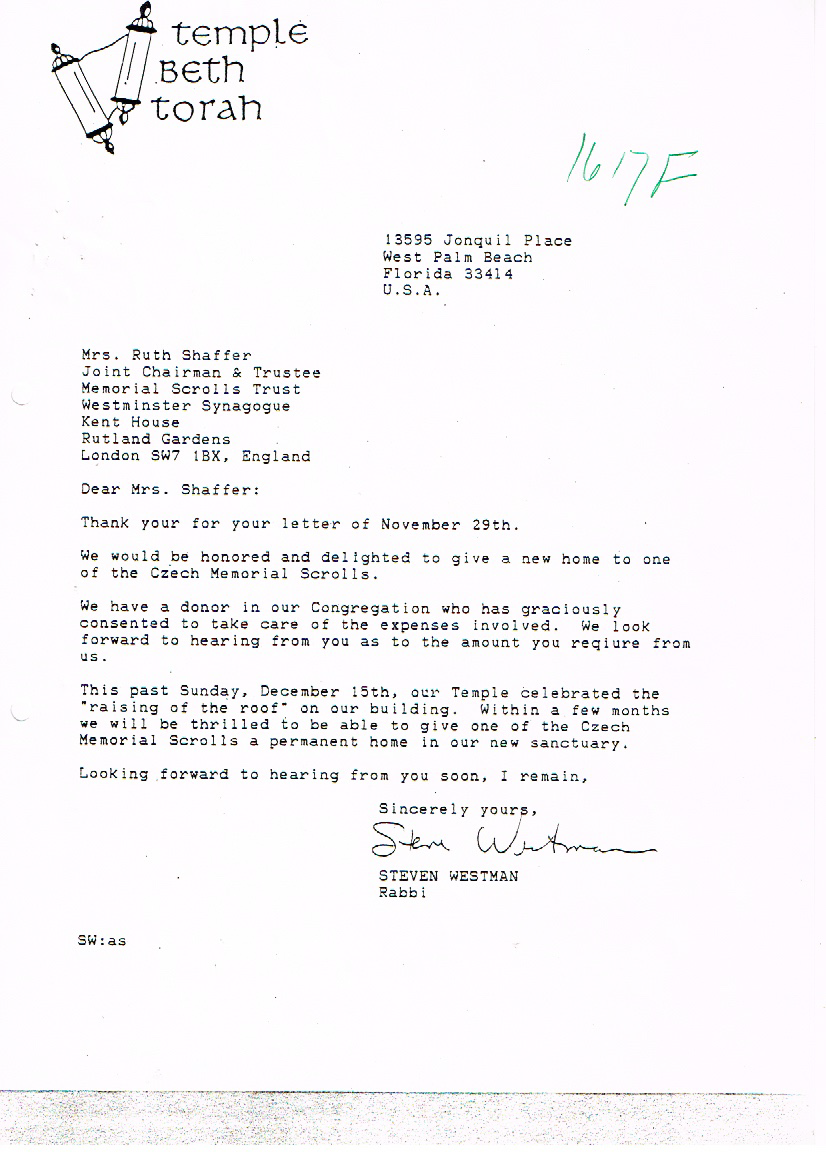
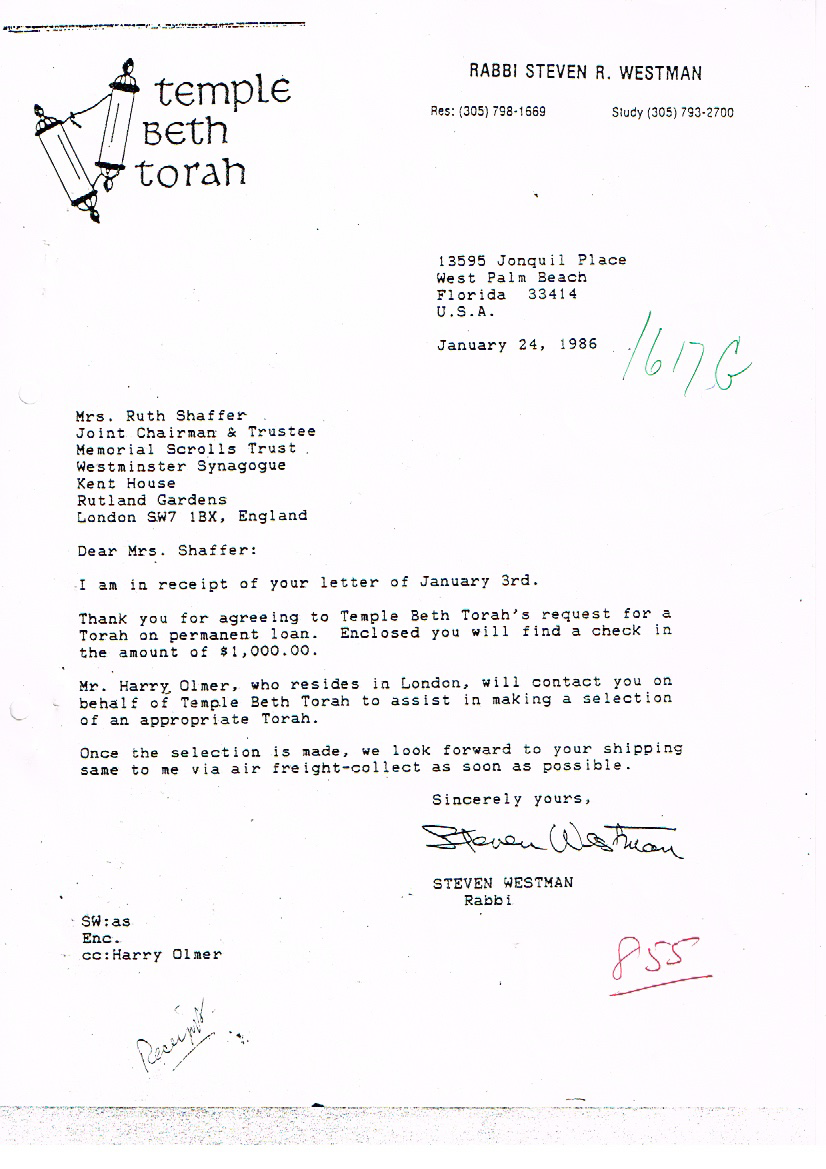
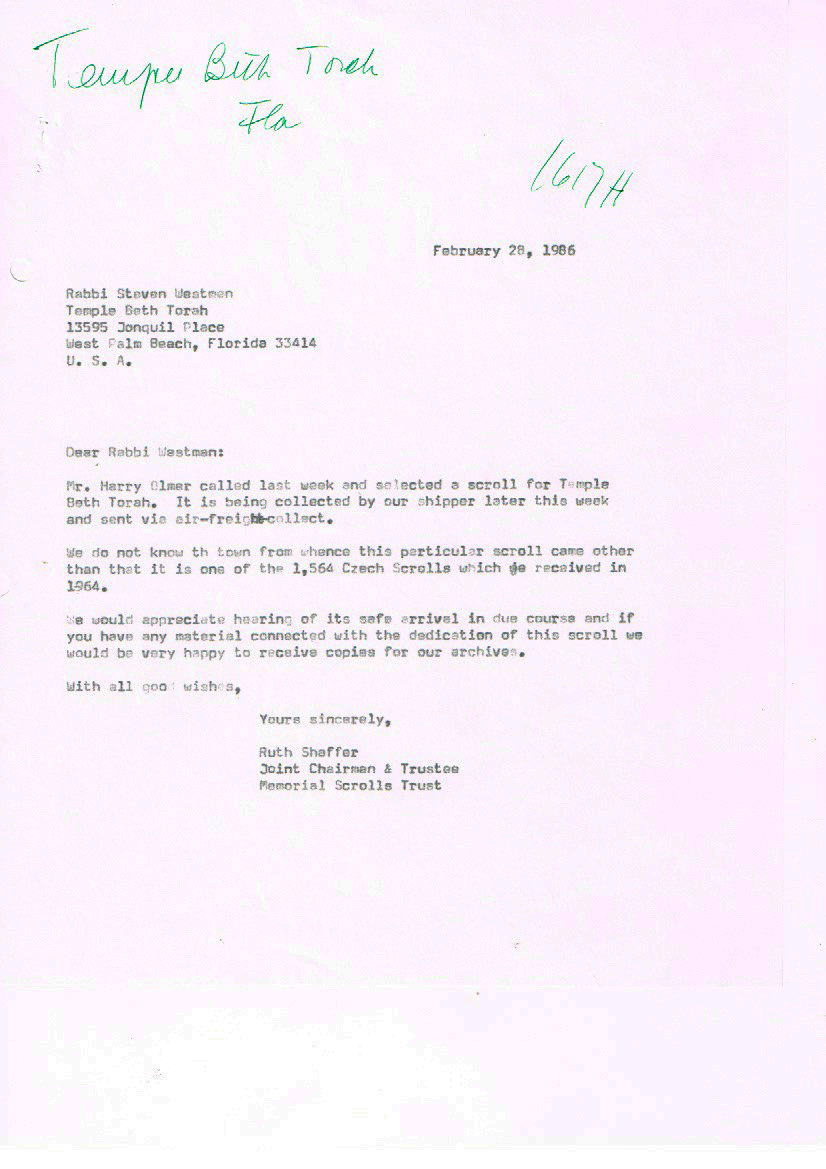
On November 1, 1985, Rabbi Steven Westman began the formal process of requesting one of the Memorial Czech Torah Scrolls that were recovered in 1964 be sent to Temple Beth Torah on permanent loan for our congregation. The following documents are a series of correspondence between Rabbi Westman and the Memorial Scrolls Trust. The scroll arrived on March 21, 1986, just in time for the temple’s building dedication
ceremony on May 4, 1986.
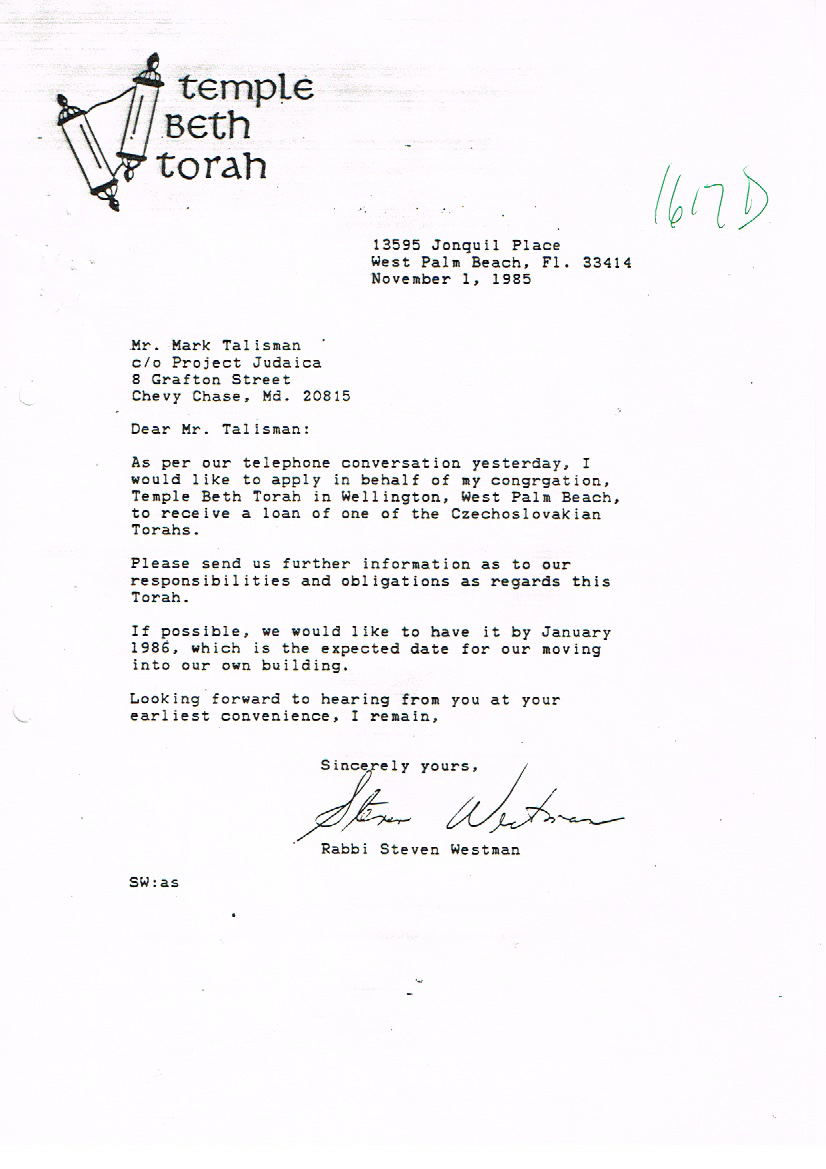
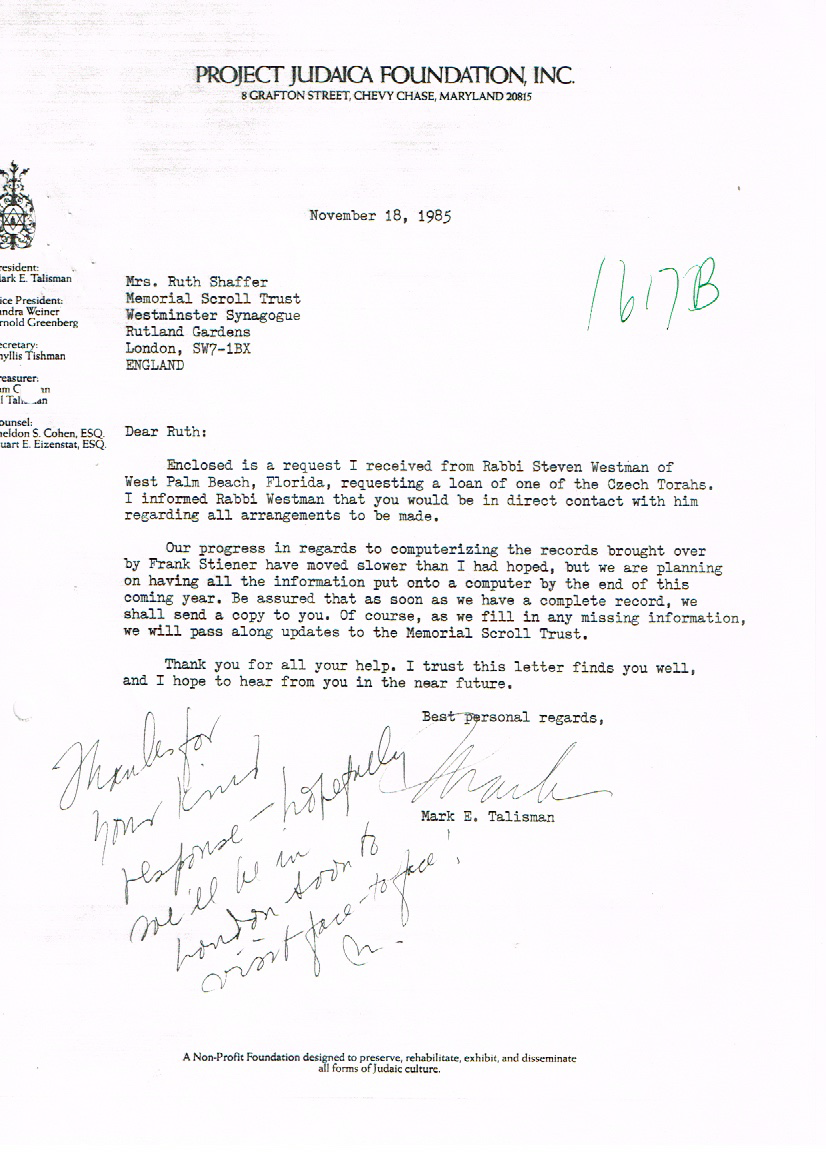
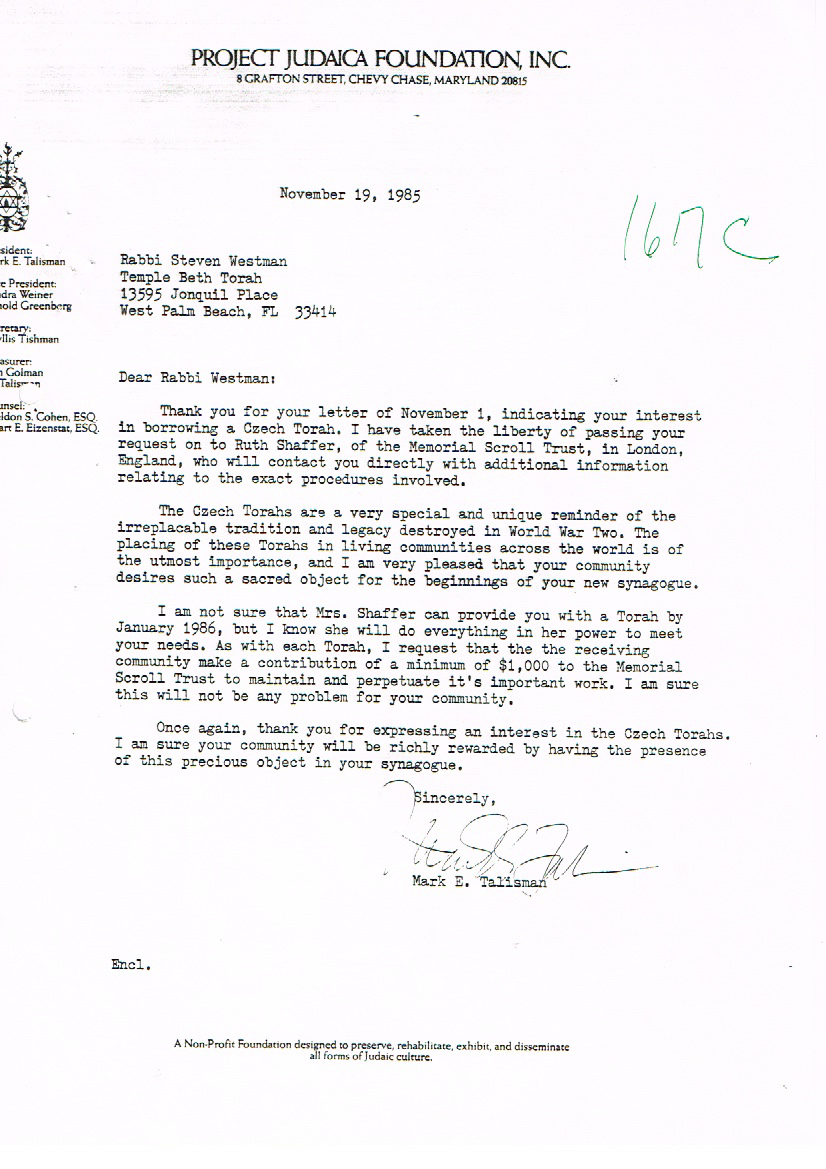
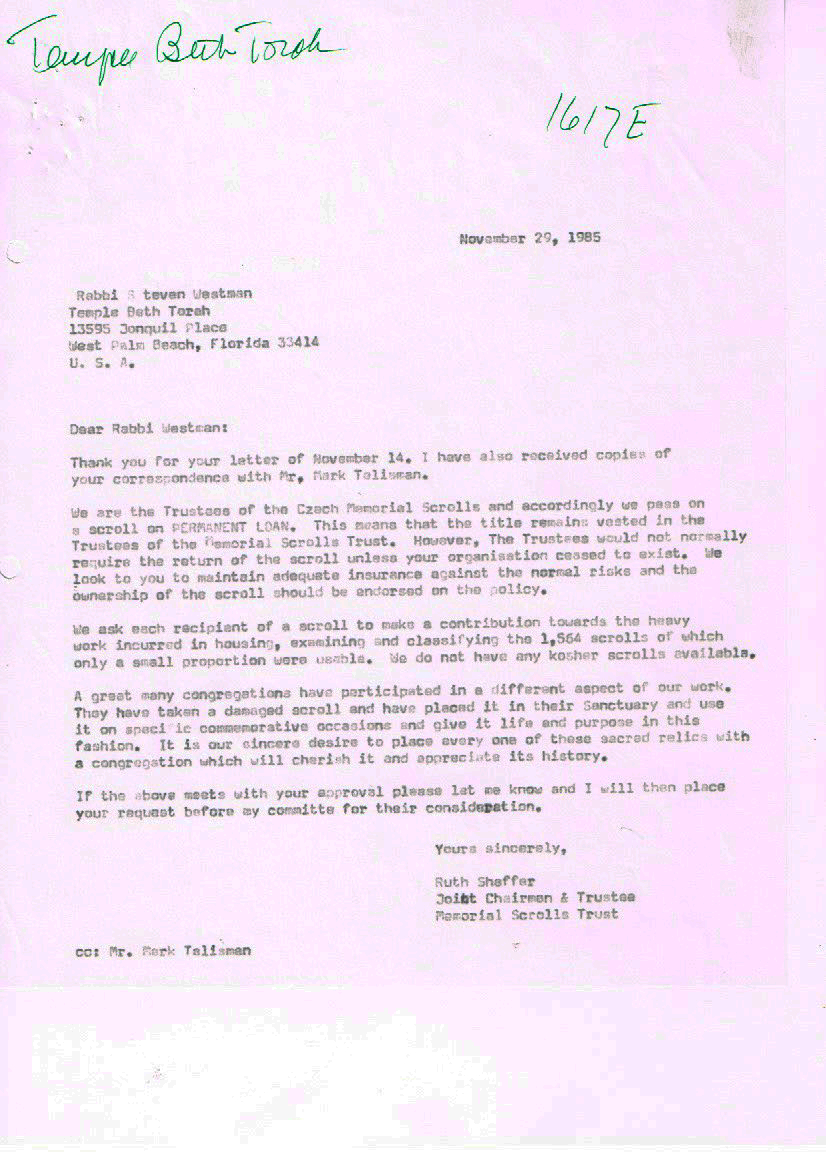
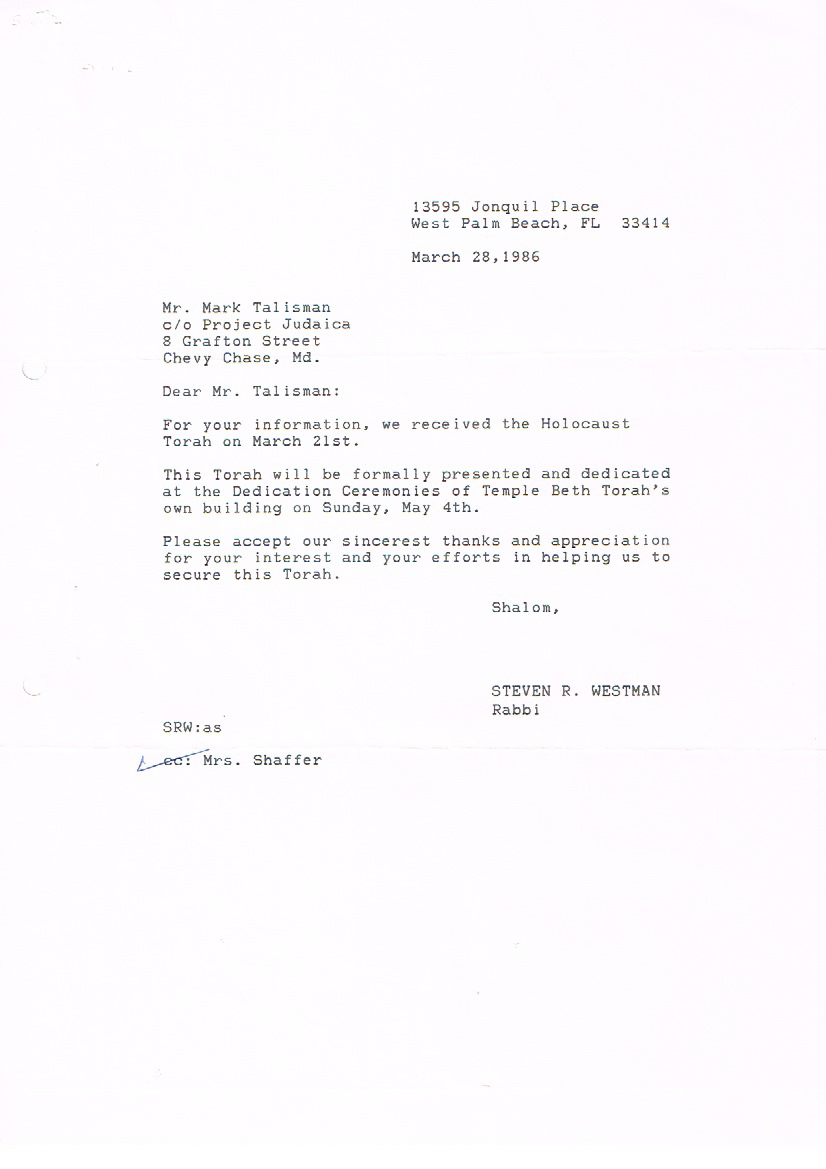
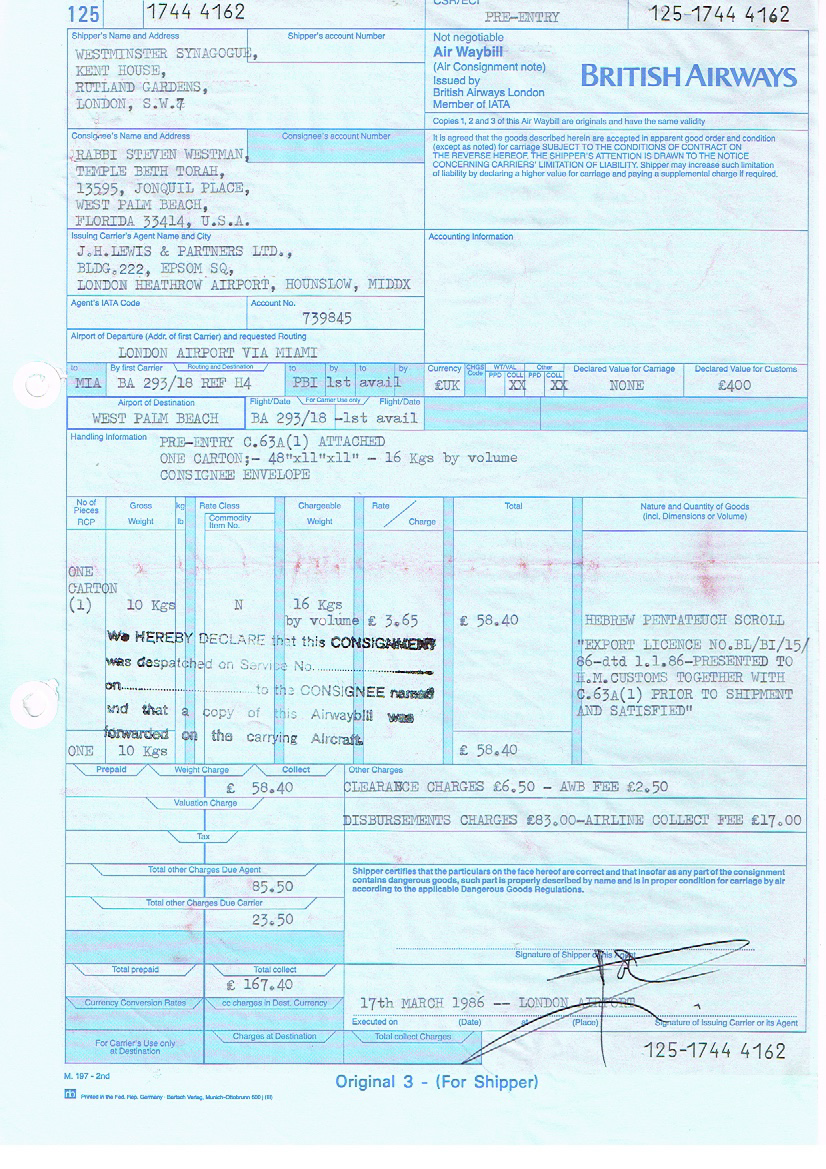
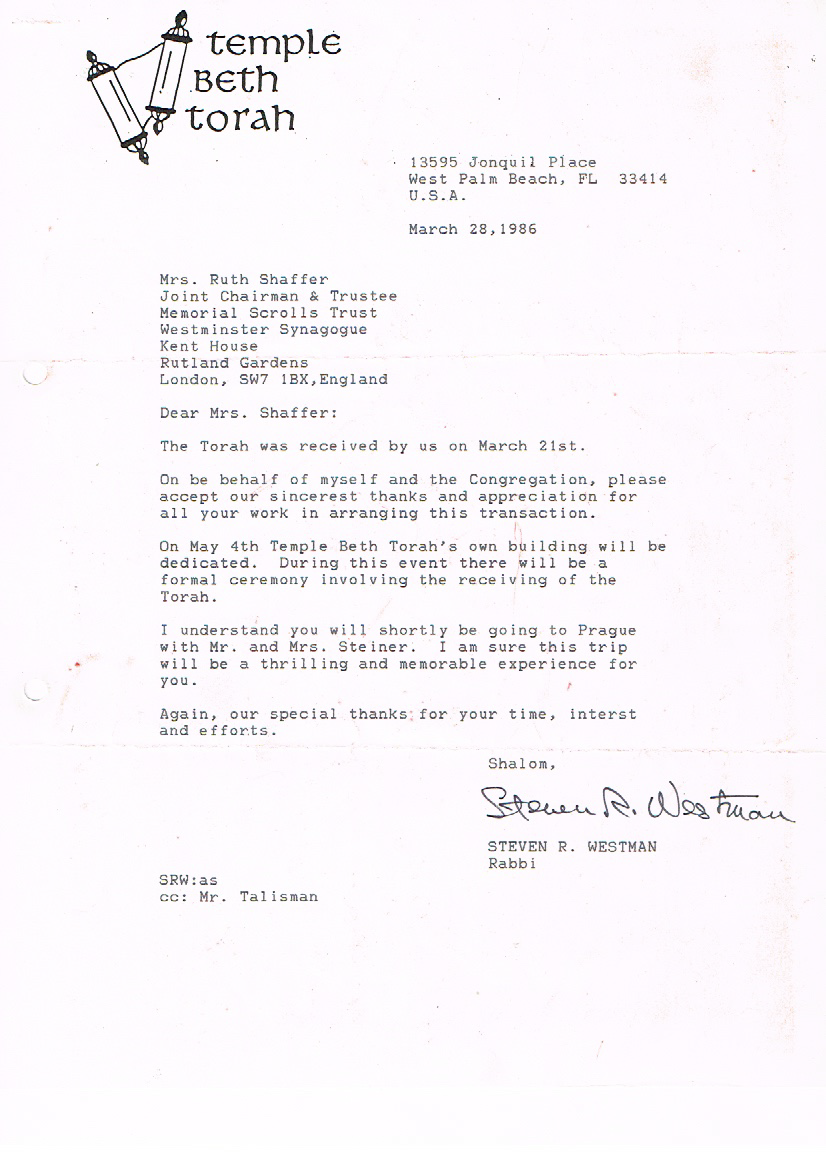
Temple Beth Torah received Scroll #855. This scroll is one of six scrolls in the Memorial Scrolls collection with a provenance originating in Humpolec.
Humpolec (its German name is Gumpolds) can be found south east of Prague, about 90 minutes’ drive away. Jews had been present in the town since the 1300s, the population waxing and waning but at its height in the later 18th and 19th centuries. By 1939 the population had dwindled less than 100 as Jews joined the drift of people to the larger centers which offered more opportunity in commerce, education, community and cultural life.
On the eve of war the total population was about 5,000, of which 148 were Jews. During the Occupation Kolin, as a district center, became an important city, the residence of a regional commander, Gestapo and police. The fate of the Jews of Humpolec was the same as those of its larger neighbor Kolin. The community in Kolin had to advise the sister communities of all the regulations being issued by the Oberlandrat and the Central Office for Jewish Affairs in Prague as increasing restrictions were put in place.
We know from the records of the Jewish Museum in Prague that 63 Jews were deported from Humpolec. The Jews of Humpolec were deported in 2 transports, both to Theresienstadt: AAc on June 9, 1942 and AAd June 13, 1942. On June 12, 1942, 58 Jews from Humpolec arrived in Theresienstadt from Kolin having left from the Zalibi railroad station. On June 13, 5 more arrived. Most of those Humpolec Jews were sent 3 days after their arrival on transport Aak to death camps in Trawniki, Treblinka or Auschwitz where they were killed.
Source: bethshalom.org.nz
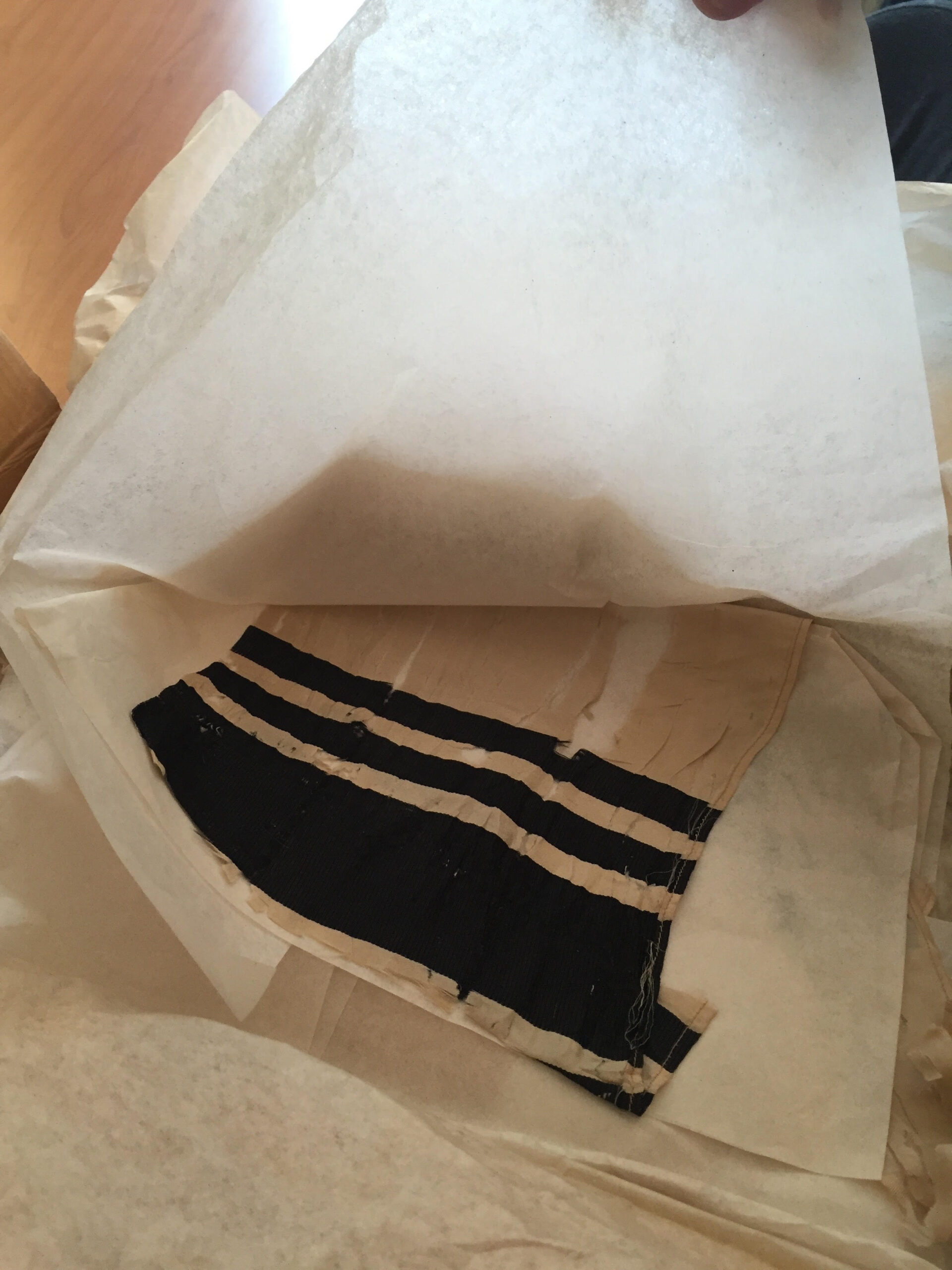
Czech Torah Scroll #855
Photo of Czech Torah #855 when it arrived in London in 1964. As you can see, it was wrapped in a tallit. It was originally thought to be an orphan scroll until it’s town of origin was eventually discovered.
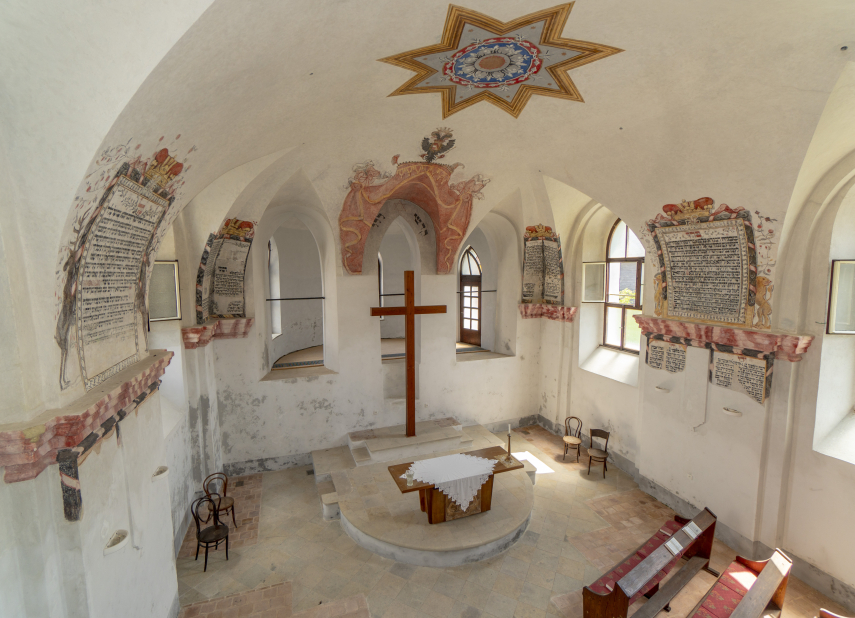
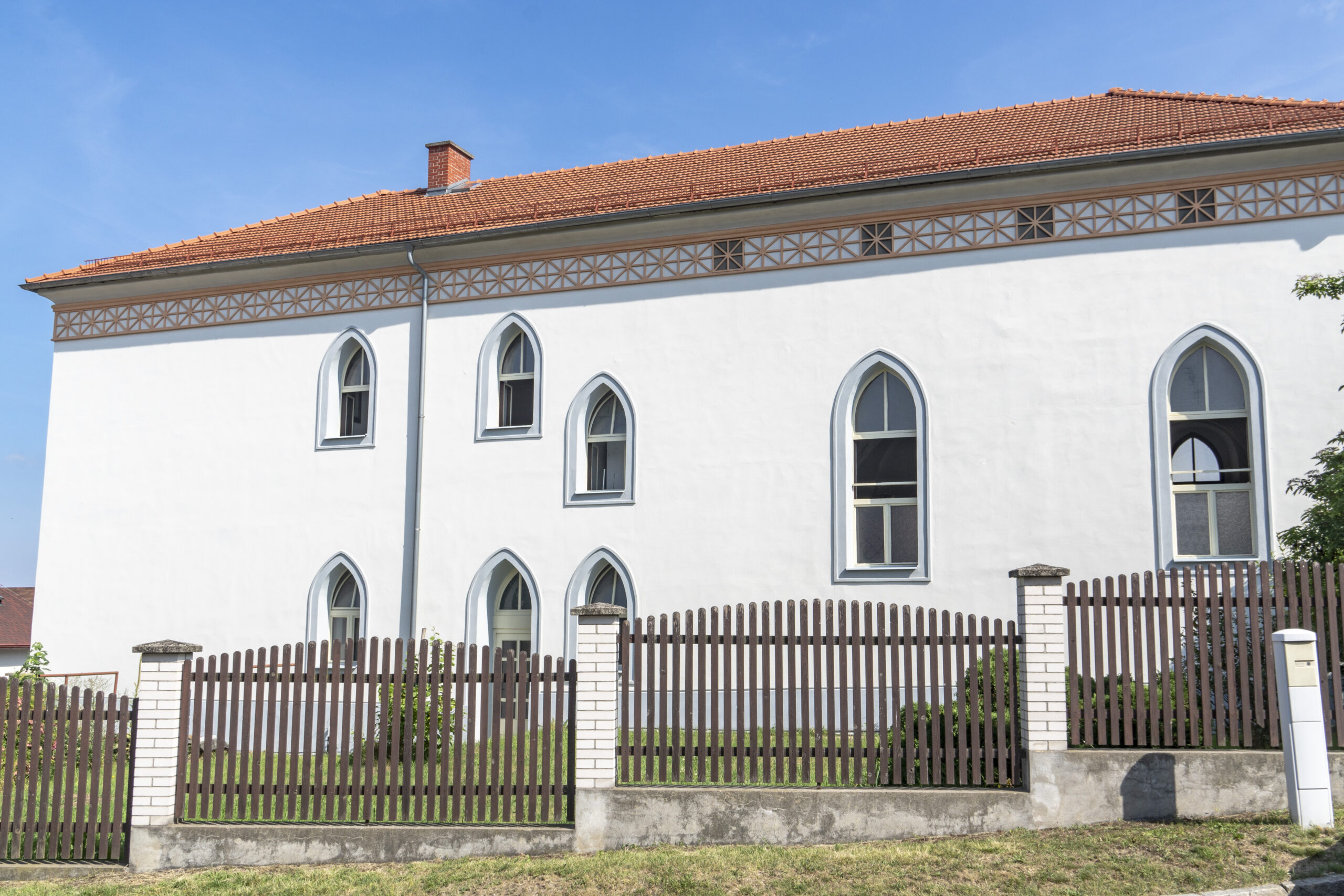
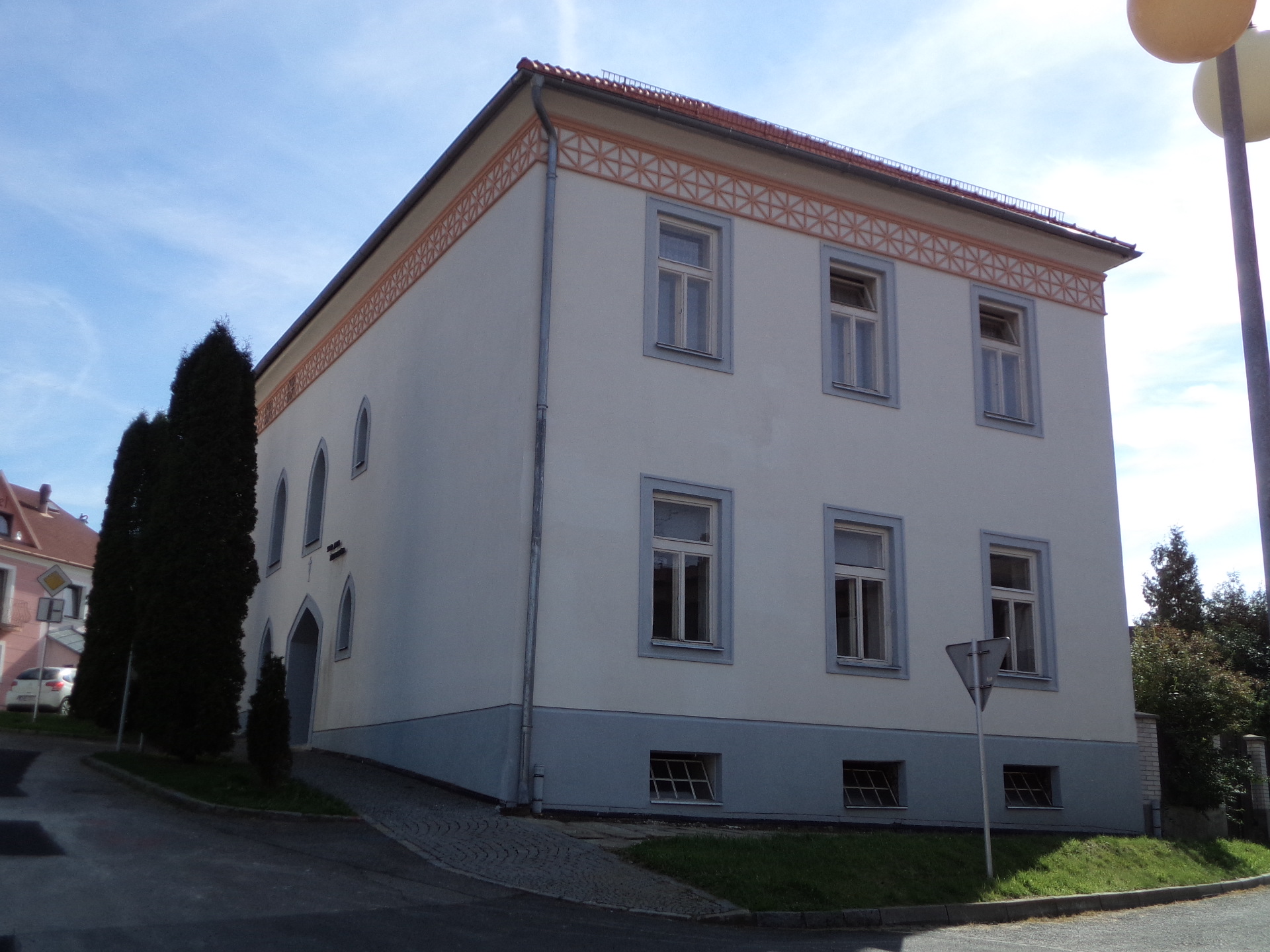
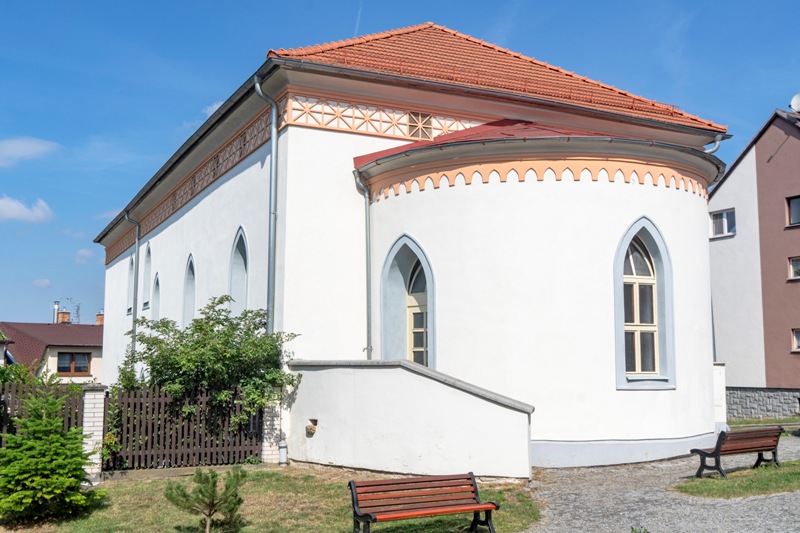
The synagogue of Humpolec, built in the former Jewish town in Baroque style between 1760 and 1762, now serves the Czechoslovak Hussite Church and is part of the tourist circuit Zichpil open-air museum.
The first mention of Jewish settlement in Humpolec dates back to 1681. Their numbers gradually increased and they settled within the city. On the basis of the so-called Translocation Act of 1726, Jews had to move outside the central area of cities. A Jewish town was founded, centered around the future synagogue. In the second half of the 19th century there were several modifications undertaken in Neo-Gothic style. The main hall was rebuilt, including a new stage by the Aron ha-kodesh, and the women’s gallery was also expanded. Unfortunately, the Jewish town and its synagogue burned down in 1886. Subsequently, according to the design of the builder Jan Martin, the building was restored, including an extension of the school.
During World War II the Jewish population was exterminated and the synagogue was abandoned and destroyed. In 1951 it was purchased by the Czechoslovak Hussite Church. During the course of the repairs, several significant discoveries were made. One of the largest, which is unparalleled in the Czech Republic and is completely unique among rural synagogues, is the discovery of the preserved original decoration from 1766. Biblical texts, plant motifs, lions, deer and other symbols once again decorate the walls of the main hall.
The synagogue has been a protected cultural monument since the year 2000. Please see photos below.
Source: vysocina.eu
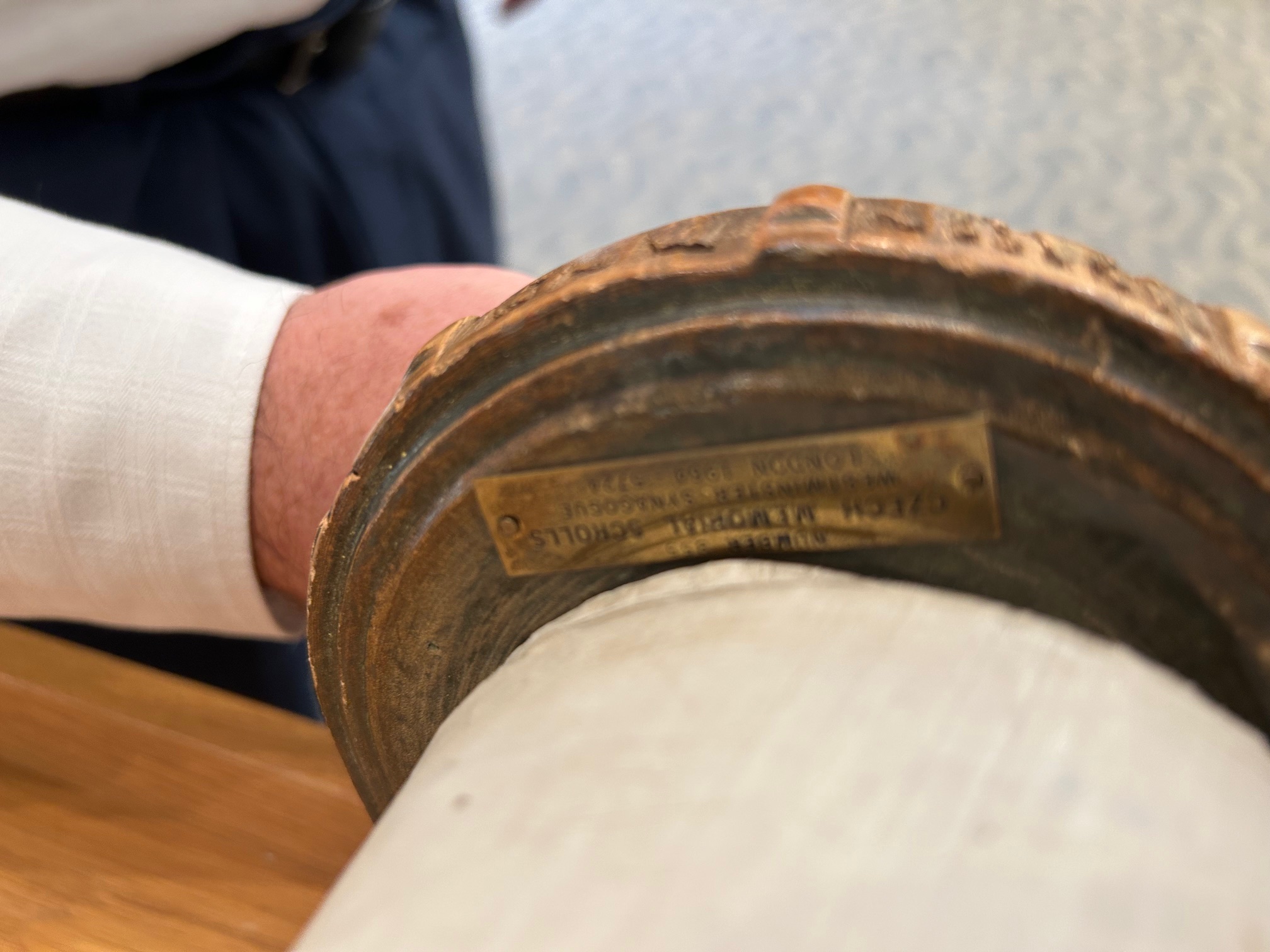
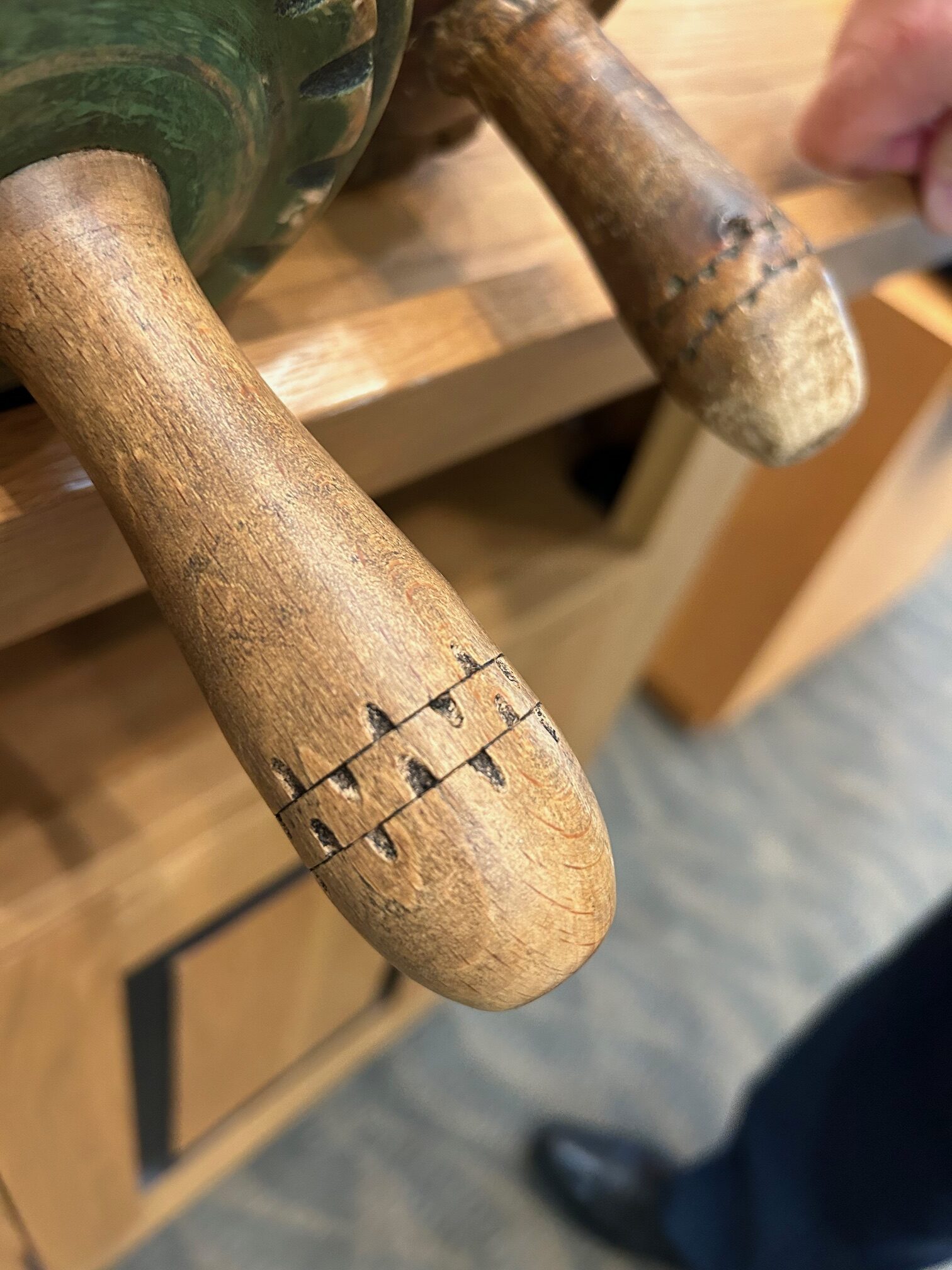
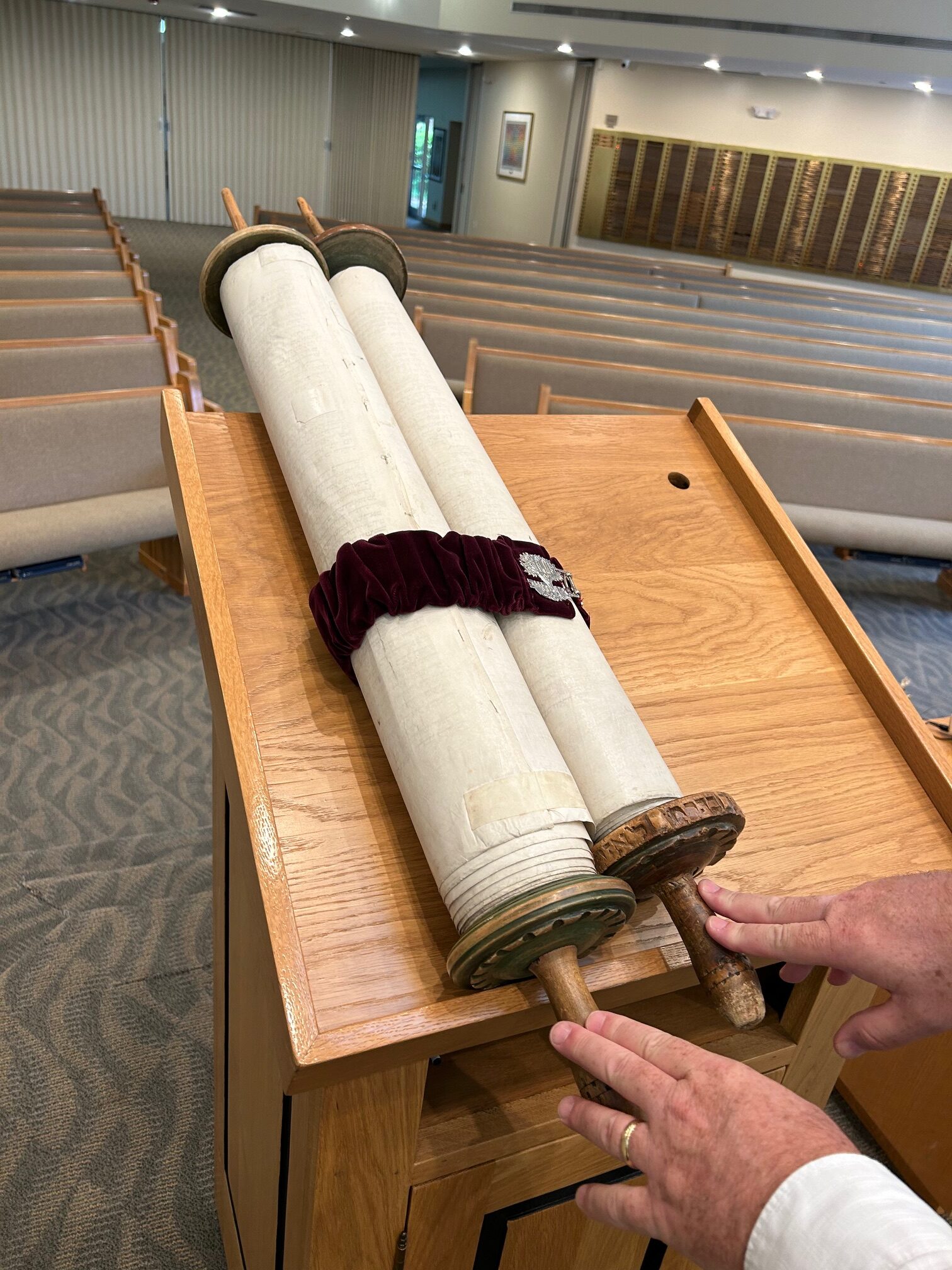
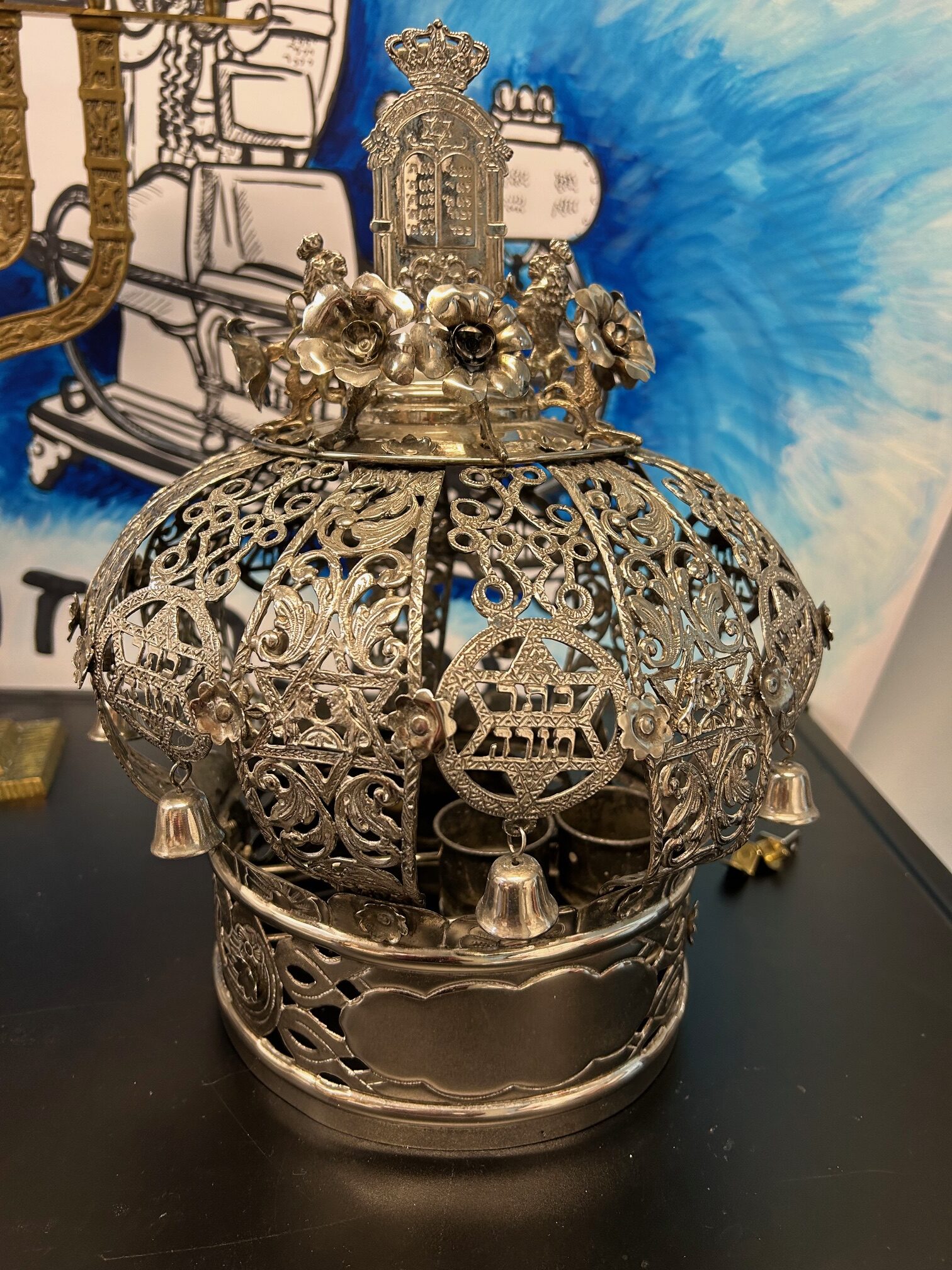
Below are other photos of Scroll #855 showing the unique rollers and other details. The Hebrew inscription on one of the rollers has been translated to: “In Memory of Reb Yeshaya, son of Reb Leizer. His Righteous name should be a blessing.”
The Memorial Scrolls Trust
Jews have lived in Bohemia and Moravia for more than a thousand years, and over that time a rich Jewish culture developed. As in most European countries, those Jewish communities were alternatively welcomed and expelled over the centuries and life was precarious. By the middle of the 19th Century they no longer suffered from residential, demographic or occupational restrictions.
Following the Munich Agreement of September 29, 1938, the Sudetenland was absorbed into Germany and their Jews expelled. Virtually all the synagogues and ritual artefacts in the Sudetenland, as in Germany, were totally destroyed in the November 1938 Pogrom. The Nazis invaded Bohemia and Moravia in March 1939, causing little destruction, possibly as they wished to benefit from the Czech armaments industry. However, the Nazis immediately took over Jewish businesses and property, forcing the congregations to close, and, as elsewhere, using the Jewish community administration to enforce their demands and decrees.
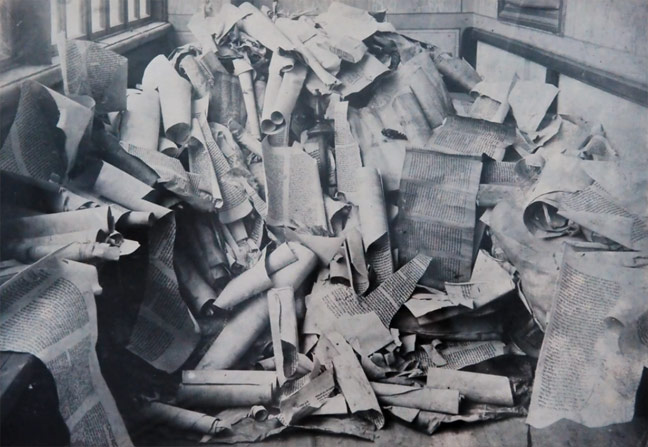
In 1942, as a result of instructions sent by Dr. Stein of the Jὓdische Kiltusgemeinde in Prague, the communities of Bohemia and Moravia packed their Sifrei Torah, gold and silver filials, books and textiles and sent them to the Jewish Museum in Prague. The volume was so great that no less than forty warehouses were required to house these treasures. As a result the inventory of the museum, which had been in existence since 1906, increased fourteen- fold. The Germans had this vast hoard catalogued by Jews, who were deported to Concentration Camps once the work was finished. Unfortunately very few of them survived.
For many years it was believed the Germans had intended to create a Museum of an Extinct race. The 2012 publication of Ark in Memory, written by Magda Veselska of the Jewish Museum in Prague, discusses the issue and states that there are no documents to prove this.
According to the 1930 census, there were 117,551 Jews in Bohemia and Moravia (356,830 in all of Czechoslovakia). By 1943 some 26,000 had managed to emigrate. 82,309 Jews were deported to Terezin and other camps, of whom 71,000 were murdered and another 7,000 prior to deportation. Today, the population of the Czech Republic is ten million, with only 4,000 Jews.
There had been at least 350 synagogues in Bohemia and Moravia, but by the end of the war more than sixty had been destroyed. After only three years of freedom there was a Communist coup on 27th February 1948 which, amongst other things, took over the Jewish Museum and warehouses, subsequently transferring some 1800 Torah Scrolls to a damp warehouse that had once been the sixteenth century Michle synagogue.
Over the years the Memorial Scrolls Trust has been repairing Torah scrolls and allocating them on loan, never sold, to Jewish communities and organizations globally, ensuring they are preserved as active symbols of Jewish heritage. The collection serves not only as a religious function but also for educational and commemorative purposes, with scrolls displayed in institutions such as the Royal Library of Windsor and the Crossroads of Civilizations Museum in Dubai.
These artifacts stand as testaments to the resilience of Jewish culture through the adversities imposed by Nazism and Communism. So, now we know that the scrolls are rare not just because many in the collection are hundreds of years old, but because they were rescued from the terror and destruction of the Holocaust (1941-1945). They are, in most cases, the last remnant of the communities that lived in the towns of Moravia and Bohemia. In the years immediately after the Nazis seized power in Germany, there was a systematic persecution of the Jewish people. Boycotting Jewish shops, segregating Jewish people from the rest of society, limits on their freedoms and basic human rights were enforced.
Eventually, violent terror and the destruction of Jewish culture began. Synagogues were burned, together with Jewish books and books by Jewish authors. As time went on Jews were ordered to leave their homes which had become under German authority and were sent away. Most never returned. They were murdered. In some towns it is hard to see any trace that a Jewish community once lived there. In other towns such as Prague the old Jewish cemeteries, synagogues and museum remain.
Source: memorialscrollstrust.org
We Remember
| Karel Bauer | 1879-1942 |
| Františka Bauerová | 1915-1942 |
| Olga Bauerová | 1911-1942 |
| Otto Blann | 1896-1942 |
| Arnošt Bretisch | 1910-1942 |
| Josef Bretisch | 1864-1942 |
| Otto Bretisch | 1907-1942 |
| Marta Bretischová | 1912-1942 |
| Adolf Brock | 1863-1942 |
| Terezie Brocková | 1873-1942 |
| Karolína Budlovská | 1870-1942 |
| Zikmund Budlovský | 1872-1942 |
| Adolf Eisler | 1869-1944 |
| Ludvík Eisler | 1870-1942 |
| Otto Eisler | 1899-1942 |
| Anna Eislerová | 1903-1942 |
| Emilie Frankenbuschová | 1886-1942 |
| Marta Frankenbuschová | 1921-1942 |
| Otilie Hitschmannová | 1873-1942 |
| Otto Kumermann | 1908-1942 |
| Robert Kumermann | 1871-1942 |
| Berta Kumermannová | 1877-1942 |
| Karel Lampl | 1921-1942 |
| Robert Lampl | 1883-1942 |
| Olga Lamplová | 1897-1942 |
| MUDr. Viktor Lüftschitz | 1897-1945 |
| Hedvika Lüftschitzová | 1909-1944 |
| Kamila Lüftschitzová | 1874-1942 |
| Jiří Maršík | 1921-1942 |
| Karel Maršík | 1928-1942 |
| Milan Maršík | 1924-1942 |
| Rudolf Maršík | 1890-1942 |
| Berta Maršíková | 1891-1942 |
| Anna Mendlová | 1870-1942 |
| JUDr. Otto Metzl | 1903-1940 |
| Věra Metzlová | 1933-1944 |
| Ida Moravcová | 1901-1942 |
| Věra Moravcová | 1931-1942 |
| Emil Moravec | 1897-1942 |
| Charlotte Pfefferová | 1872-1943 |
| Johanna Pichlerová | 1874-1942 |
| Emanuel Schärfner | 1877-1942 |
| Laura Schärfnerová | 1876-1942 |
| Karolína Scheuerová | 1892-1942 |
| Milan Schneider | 1886-1944 |
| Otto Schneider | 1892-1942 |
| Ema Schneiderová | 1894-1944 |
| Františka Schneiderová | 1898-1942 |
| Lily Schneiderová | 1920-1943 |
| Leopold Schwarz | 1928-1942 |
| Marie Regina Schwarzová | 1893-1942 |
| Berta Strádalová | 1887-1942 |
| Anna Stránská | 1916-1942 |
| Irma Stránská | 1914-1942 |
| Rudolf Stránský | 1911-1942 |
| Marta Svatoňová | 1899-1942 |
| Ludvík Vrba | 1888-1942 |
| Kamila Vrbová | 1893-1942 |
| Jakub Weissmann | 1868-1942 |
| Berta Weissmannová | 1878-1942 |
| Max Zaitschek | 1920-1942 |
| Vítězslav Zaitschek | 1889-1942 |
| Anna Zaitschková | 1891-1942 |
| Hana Zaitschková | 1915-1942 |